Monthly Archives: May 2022

Ample Guitar Super Jumbo v3.5.0 VST2 VST3 AU AAX STANDALONE

By | May 4, 2022

Ample Guitar Super Jumbo v3.5.0 [WIN & MACOSX]

Ample Guitar Super Jumbo v3.5.0 VST2 VST3 AU AAX STANDALONE [WIN & macOS]

Ample Guitar SJ aim to bring a Gibson SJ-200 Vintage Custom Shop Acoustic Guitar sound to your studio.

System Requirements:

  •  Windows: Windows 7/8/10, 64-bit only (32-bit not supported)
  •  Mac: 10.9 or higher
  •  VST2, VST3, AU, AAX and Standalone host
  •  10 GB Hard Disk, Intel i5 or higher

Sampling:

  •  Size: 8.6 GB
  •  Thumb-Pick, Strum two sample libraries
  •  Stereo and Mono Modes
  •  Body, Neck, AB Stereo 4 mics
  •  Controllable Resonance Sound
  •  Rich Fingering Sound
  •  Sustain, Hammer On & Pull Off, Legato Slide, Slide in & out, Palm Mute, Pop, Natural Harmonic, Pinch Harmonic 10 articulations, Legato at random length & pitch & poly

Technology:

  •  CPC (Customized Parameters Control) – any controller can be controlled by MIDI CC or Automation
  •  Double Guitar
  •  Poly Legato and Slide Smoother
  •  Alternate Tuner
  •  Multiple Capo Logics – providing various options of automatic fingering logic to cover different performance such as solo, chorus, and so on

Riffer:

  •  String Roll Editor: can clearly show fingering, articulation, expression and even playing noise. Every note has 8 attributes – pitch, velocity, length, off velocity, articulation, legato, vibrato and bend, with which you can make a delicate lick
  •  Dice – Random Riff Generator: A click will create a new inspiration because it is not simply a random algorithm. Rather, it summarizes the rules through analyzing a bunch of music scores
  •  Multiple selection and operation, undo and redo etc. multiple MIDI tools, including fixed velocity, length legato and restrict, select, move, draw, erase, split, glue etc

Strummer:

  •  14 Strum notes + 28 ways to play for every chord
  •  Strum Legato – legato articulations can be played while strumming
  •  4 humanization settings
  •  Select and Detect 2 chord modes, any chords could be customized
  •  Strum SEQ with customized rhythm
  •  Delicate presets with MIDI export

FX:

  •  High order 8-band EQ, intuitive control of frequency response, real-time visualization of input and output spectrum, support of soloing single band
  •  2-Line Compressor, real-time visualization of input and output signal, two detection modes RMS & Peak, support of soft knee, auto release and auto makeup
  •  6-Tap Echo, real-time visualization of the processing of stereo signal, can tweak the parameters of 6 echo points individually: feedback, pan, volume etc
  •  IR Reverb, providing four types of IR: Room, Studio, Hall, and Larger Hall. 3D visualization of IR spectrum

Tab Reader:

  • The Tab Player can load and play several prevalent guitar tablature file formats. Users can load, display and playback any specific track inside a tablature file. When used in DAWs, the Tab Player also allows users to export the tablature as an audio file

Download link

Demo Preview:

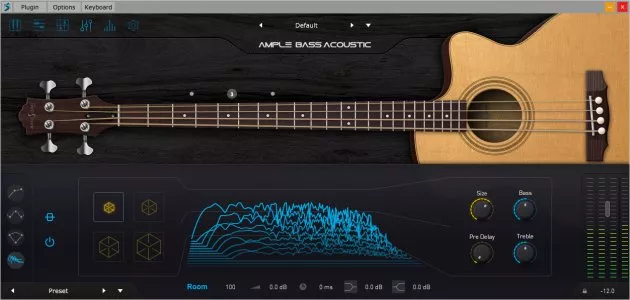
Ample Bass Acoustic v3.5.0 VST2 VST3 AU AAX STANDALONE

By | May 4, 2022

Ample Bass Acoustic

Ample Bass Acoustic v3.5.0 VST2 VST3 AU AAX STANDALONE [WIN macOS]

Ample Bass Acoustic is a virtual acoustic bass instrument based on samples of a Guild B-54 CE Acoustic Bass.

System Requirements:

  • Windows: Windows 7/8/10, 64-bit only (32-bit not supported)
  • Mac: 10.9 or newer
  • VST2, VST3, AU, AAX and Standalone host
  • 10 GB Hard Disk, Intel i5 or higher

Sampling:

  • ABA has a 4.89 GB sample library which is naturally recorded on every single fret. No destructive editing and dynamic processing are applied
  • Features 12 articulations: Sustain, Palm Mute, Natural Harmonic, Hammer On & Pull Off, Legato Slide, Slide in & out, Pop & Slap and Dead Note
  • The Legato articulations can be used to achieve legato notes of any duration, speed, pitch and polyphony
  • Alternate Tuning: Ample Acoustic Bass supports alternate tunings to the lowest note B0

Features:

  • New sample engine applied to both plugged and unplugged
  • ABA is designed from the ground up to be the most versatile bass virtual instrument available today with a new level of expressiveness. ABA not only performs as an extraordinary acoustic instrument by playback partially from mic samples, but also as an electric instrument by playback partially from DI samples, creating a more dynamic and subtle playing experience. Furthermore, users can mix and process Mics and DI separately to get a variety of sound
  • Multiple stereo and mono modes
  • For Mic part, ABA provides two stereo and two mono modes. Users can adjust volumes of mics and width to get more options in stereo mode, in which ABA has rich expressiveness even for solo. For mono modes, ABA can play an important role of middle-low end in a band steadily


Tab Player:

  • Redesigned Tab Player for bass tab. All articulations and notations are supported by the tab player. Realistic Tab playback can be achieved through fine parameter adjustments and humanizations
  • Multiple Capo Logics – providing various options of automatic fingering logic to cover different performance such as solo, chorus, and so on

Riffer:

  • String Roll Editor: can clearly show fingering, articulation, expression, and even playing noise. Every note has 8 attributes – pitch, velocity, length, off velocity, articulation, legato, vibrato and bend, with which you can make a delicate lick
  • Dice – Random Riff Generator: A click will create a new inspiration because it is not simply a random algorithm. Rather, it summarizes the rules through analyzing a bunch of music scores

FX:

  • High order 8-band EQ, intuitive control of frequency response, real-time visualization of input and output spectrum, support of soloing single band
  • 2-Line Compressor, real-time visualization of input and output signal, two detection modes RMS & Peak, support of soft knee, auto release and auto makeup
  • 6-Tap Echo, real-time visualization of the processing of stereo signal, can tweak the parameters of 6 echo points individually: feedback, pan, volume etc
  • IR Reverb, providing four types of IR: Room, Studio, Hall, and Larger Hall. 3D visualization of IR spectrum

Download link

Demo Preview:


Ample Bass Jazz v3.5.0 VST2 VST3 AU AAX STANDALONE

By | May 4, 2022

Ample Bass Jazz v3.2 [WIN & MACOSX]

Ample Bass Jazz v3.5.0 VST2 VST3 AU AAX STANDALONE [WIN MacOS]

Ample Bass J aim to bring the Fender Jazz Bass(John English Masterbuilt) sound to your studio.

System Requirements :

  •  Windows: Windows 7/8/10, 64-bit only (32-bit not supported)
  •  Mac: From 10.9 to 10.14
  •  VST2, VST3, AU, AAX and Standalone host
  •  8GB Hard Disk, Intel i5 or higher

Sampling :

  •  Library Size: 5,99 GB
  •  DFD(Direct from disk)
  •  Rich Fingering Noise
  •  Sustain, Palm Mute, Natural Harmonic, Hammer On & Pull Off, Legato Slide, Slide in & out, Slap, Pop, Tap, Accentuated, Repeat Note, Dead Note 12 articulations, Legato at random length & pitch & poly

Technology :

  •  CPC(Customized Parameters Control), any button knob etc can be controlled by MIDI CC or Automation
  •  Poly Legato and Slide Smoother
  •  Alternate Tuner & lowest to B
  •  Multiple Capo Logics – providing various options of automatic fingering logic to cover different performance such as solo, chorus, and so on
  •  Stereo DI Signal
  •  Automatic and manual Buzzing system

AMP system :

  •  Built-in AMP system, including three classic AMP models: Vintage-15, Bass-500, Bass-Pro
  •  1×15, 2×10, 4×10, 8×10 Four cabinets
  •  Each Cabinet has 4 mic options: U87, C414, MD421 and SM57
  • Room Mics

Riffer 2 :

  •  String Roll Editor: can clearly show fingering, articulation, expression, and even playing noise. Every note has 8 attributes – pitch, velocity, length, off velocity, articulation, legato, vibrato and bend, with which you can make a delicate lick
  •  Dice – Random Riff Generator: A click will create a new inspiration because it is not simply a random algorithm. Rather, it summarizes the rules through analyzing a bunch of music scores
  •  Multiple selection and operation, undo and redo etc. multiple MIDI tools, including fixed velocity, length legato and restrict, select, move, draw, erase, split, glue etc

FX :

  •  High order 8-band EQ, intuitive control of frequency response, real-time visualization of input and output spectrum, support of soloing single band
  •  2-Line Compressor, real-time visualization of input and output signal, two detection modes RMS & Peak, support of soft knee, auto release and auto makeup
  •  6-Tap Echo, real-time visualization of the processing of stereo signal, can tweak the parameters of 6 echo points individually: feedback, pan, volume etc
    IR Reverb, providing four types of IR: Room, Studio, Hall, and Larger Hall. 3D visualization of IR spectrum

Tab Player:

  •  The Tab Player can load and play several prevalent guitarbass tablature file formats. Users can load, display and playback any specific track inside a tablature file. When used in DAWs, the Tab Player also allows users to export the tablature as an audio file

Download link

Demo Preview:


30 Day Singer How to Sing & Play Guitar Ukulele at the Same Time TUTORIAL

By | May 4, 2022

30 Day Singer How to Sing & Play Guitar Ukulele at the Same Time TUTORIAL

Welcome to your tutorial on singing and playing guitar or ukulele at the same time. I’ll be demonstrating on ukulele, so for guitarists, of course your chord shapes will be different, but our coordination and strumming will be the same.

In part 1, we’ll learn (or refresh) the melody of “Shake it up” and play through the chords separately. In part 2, we’ll put singing and playing together in phases. And in part 3, we’ll pick up the tempo and learn a versatile strum pattern.

We’re using “Shake it up” today, but you can follow these steps with any song you’re learning. For the best results as you’re just starting out, I recommend you choose EASY 3-4 chord songs, set your metronome at a SLOW tempo, and KEEP GOING even if you miss a chord or lyric.

Lessons:

  • 1: Intro
  • 2: Warmup
  • 3: Part 1: Singing the melody + playing the chords
  • 4: Part 2: Putting it together in phases
  • 5: Part 3: Getting up to speed
  • 6: Conclusion

Download link

30 Day Singer How to Sing & Play Piano at the Same Time TUTORIAL

By | May 4, 2022

30 Day Singer How to Sing & Play Piano at the Same Time TUTORIAL

30 Day Singer How to Sing & Play Piano at the Same Time TUTORIAL

Welcome to your tutorial on singing and playing piano at the same time! In part 1, we’ll learn (or refresh) the melody of “Shake it up” and play through the chords separately. In part 2, we’ll put singing and playing together in phases. And in part 3, we’ll pick up the tempo and learn a versatile rhythmic pattern.

We’re using “Shake it up” today, but you can follow these steps with any song you’re learning. For the best results as you’re just starting out, I recommend you choose EASY 3-4 chord songs, set your metronome at a SLOW tempo, and KEEP GOING even if you miss a chord or lyric.

Lessons:

  • 1: Intro
  • 2: Warmup
  • 3: Part 1: Singing the melody + Playing the chords
  • 4: Part 2: Putting it together in phases
  • 5: Part 3: Getting up to speed
  • 6: Conclusion

Download link

30 Day Singer How to Gradually Sing Higher TUTORIAL

By | May 4, 2022

30 Day Singer How to Gradually Sing Higher TUTORIAL

30 Day Singer How to Gradually Sing Higher TUTORIAL

Welcome to your tutorial on how to gradually sing higher! We’ll get to all the tips and exercises soon enough, but I want you to have these 3 things in mind right away:

1.Be patient and consistent: stretching your range takes time, but you’ll make progress with daily practice.
2.Relax! The biggest hindrance to your high notes is tension. The more you open up and let go, the easier it’ll be.
3.Don’t judge the sound. Our goal in the beginning is just phonation, or making sound. It may sound squeaky or breathy; it may crack or disappear. As long as you’re not straining or in pain, stay relaxed and keep at it!

In each part of this tutorial, remind yourself: patience, relaxation, non-judgment. Part 1 is called “Starting Small”, because we’ll begin with exercises that use a small sound, narrow vowels, and partial closure of the vocal tract (SOVT’s). Part 2 introduces range-extending exercises that are both ascending and descending. And part 3 is all about opening up and sustaining high notes, with a lifted palate and an open throat position.

Remember, you can take as much time as you need. Only move onto the next video when you’re feeling confident and ready.

Lessons:

  • 1: Intro
  • 2: Warming Up
  • 3: Starting small (SOVT’s, narrow vowels, small sound)
  • 4: Range-extending exercises (Top-down & Bottom-up, Wide-range)
  • 5: Opening up & Sustaining (Lifted palate, open throat, slight tilt backward)
  • 6: Conclusion

Download link

30 Day Singer How to Sing (Any Song) in Your Signature Style TUTORIAL

By | May 4, 2022

30 Day Singer How to Sing (Any Song) in Your Signature Style TUTORIAL

30 Day Singer How to Sing (Any Song) in Your Signature Style TUTORIAL

This tutorial is all about singing in your signature style. We’re going to use Auld Lang Syne to practice, since a lot of you already know it, and it’s a pretty simple melody that we can make our own!

In part 1, we’ll learn the classic version and work on a healthy, resonant tone, which is the foundation for classical and choral singing. In part 2, we’ll use a more contemporary tone and practice our pop and r&b stylization. And in part 3, we’ll explore yet another style of singing with jazz. Within each video, I’ll cover a few essentials for singing in that style, and you’ll get plenty of time to sing, sometimes along with me and sometimes with piano.

Join me for a quick warmup, as this tutorial skips exercises in favor of more song work.

Lessons:

  • 1: Intro
  • 2: Warmup
  • 3: Part 1: Classic
  • 4: Part 2: Pop / R&B
  • 5: Part 3: Jazz
  • 6: Conclusion

Download link

30 Day Singer How to Gradually Sing Lower TUTORIAL

By | May 4, 2022

30 Day Singer How to Gradually Sing Lower TUTORIAL

30 Day Singer How to Gradually Sing Lower TUTORIAL

Welcome to your tutorial on how to gradually sing lower! High notes seem to get all the attention; it’s time to give our low notes a little love!

In part 1, we’ll get started with some low note support, including vocal fry and using our speaking voice to find low note placement. Part 2 will consist of several exercises to gradually stretch your range lower; and part 3 will cover sustaining those low notes.

Because we’re working on gradual growth, give yourself time and permission to move at your own pace. Consider staying on part 1 for a few weeks. There’s no benefit to rushing through.

See you in part 1!

Download link

30 Day Singer 30 Day Beginner Course with Camille TUTORIAL

By | May 4, 2022

30 Day Singer 30 Day Beginner Course with Camille TUTORIAL

30 Day Singer 30 Day Beginner Course with Camille TUTORIAL

Camille van Niekerk is the instructor for this 30 day course for beginners. Camille van Niekerk is a singer and vocal instructor in Southern California with roots in musical theater, dancing, directing, and playing roles such as Belle in Beauty & the Beast, Chiffon in Little Shop of Horrors, and Gabriella in High School Musical.

Lessons:

  • Day 1: Welcome to 30-Day Singer
  • Day 2: Quick Warm-Up Routine
  • Day 3: Getting the Most Out of This Course
  • Day 4: Healthy Vocal Technique
  • Day 5: All About Posture
  • Day 6: Breathing For Singing
  • Day 7: Vocal Anatomy: Meet the Larynx
  • Day 8: Applying Warm Ups To Song Work
  • Day 9: Recap of Healthy Technique – Rest, Ear Training, or Listening Day
  • Day 10: Cord Compression
  • Day 11: Chest Voice
  • Day 12: Head Voice
  • Day 13: Stretching Your Range
  • Day 14: Tone
  • Day 15: FAQ & Troubleshooting
  • Day 16: Recap of Growth
  • Day 17: Dynamics
  • Day 18: Belting
  • Day 19: Vocal fry
  • Day 20: Falsetto
  • Day 21: Runs, Turns & Falls
  • Day 22: Vibrato
  • Day 23: Mix voice
  • Day 24: Recap – Rest, Ear Training, or Listening Day
  • Day 25: Song Analysis
  • Day 26: Phrasing & Style
  • Day 27: Confidence & Nerves
  • Day 28: Performance
  • Day 29: Growing as an Artist/Performer
  • Day 30: Congratulations!

Download link

30 Day Singer Foundations of Vibrato Part 2 TUTORIAL

By | May 4, 2022

30 Day Singer Foundations of Vibrato Part 2 TUTORIAL

30 Day Singer Foundations of Vibrato Part 2 TUTORAL

Welcome to Vibrato, Part 2! In part 1, we covered the elements of healthy vocal technique that must be in place for vibrato to develop. Those elements include breath support, good cord closure, and resonant space. A fourth element, important to every single aspect of singing, is relaxation! Overly tense vocal production will not result in free, natural vibrato.

In this tutorial, we’re building on that foundation to refine our vibrato. Part 1 covers vibrato and straight tone, with exercises incorporate both in your singing. In part 2, we’ll cover some common issues with vibrato, including a vocal wobble or tremolo. And part 3 is all about vibrato usage in different musical genres, with some style-specific exercises.

We’ll get started with a quick warm-up in the next video.

Lessons:

  • 1: Intro
  • 2: Warm Up
  • 3: Part 1: Vibrato and Straight Tone
  • 4: Part 2: Correcting issues with vibrato
  • 5: Part 3: Vibrato usage in different musical genres
  • 6: Conclusion

Abram Poliakoff is a singer, guitarist, pianist, teacher, conductor, and composer. He received a Bachelors of Music in Vocal Arts from USC’s Thornton School of Music and has been teaching music for 8 years. He is currently both the Associate Artistic Director and a tenor in the L.A. Choral Lab, which recently released its first studio album Sonic Visions in the fall of 2019. Abram teaches and performs a wide range of genres including Classical, Jazz, Folk and Popular music in the Los Angeles area. He has also sung with the San Francisco Opera and Pocket Opera in the Bay Area. His teaching mission is to help his students utilize vocal technique to find their authentic and healthy voice while maximizing genre flexibility and a naturalness of expression.

Download link

30 Day Singer How to Sing Country TUTORIAL

By | May 4, 2022

30 Day Singer How to Sing Country TUTORIAL

30 Day Singer How to Sing Country TUTORIAL

Country music has its roots in American blues and folk music. Over time, the country genre has also come to include elements of pop, rock, and most recently, hip hop and rap. Because it originated in the American south, country singers tend to sing with a distinct accent and tone, which some call the “country twang”.

In part 1 of this tutorial, we’ll cover vowels and the Southern accent. In part 2: twang, resonance and tone. And part 3: country stylization.

But before you head over to part 1, are you listening to a lot of country music? If you want to sing in this style well, you should be! Let the greats of country music be your first teachers as you listen, sing along, and learn to capture their style. This tutorial will help synthesize what you’re hearing and give you a jump start to singing country music.

Lessons:

  • 1: Welcome
  • 2: Vowels & Accent
  • 3: Tone & Resonance
  • 4: Country Style
  • 5: Conclusion

Download link

30 Day Singer Foundations of Vibrato TUTORIAL

By | May 4, 2022

30 Day Singer Foundations of Vibrato TUTORIAL

30 Day Singer Foundations of Vibrato TUTORIAL

This tutorial will walk you through the foundations of vibrato. Because vibrato is a naturally occurring event, it’s not a technique that we learn in isolation. Rather, it’s the result of healthy singing technique over all. The three elements that must be in place for vibrato to occur are (1) breath support, (2) cord compression, and (3) resonant space. Each video will explain and give you exercises to build your technique in that area. If you aren’t currently able to sing with vibrato, that’s okay. Most often, that’s a sign that you’re holding tension somewhere; or, it could be that your technique in one of these areas needs work. If your technique is solid, vibrato will happen by letting go, not by pushing or manipulating anything mechanically. Just relax, and we’ll take it one step at a time.

Lessons:

  • 1: Introduction
  • 2: Breath Support
  • 3: Cord Compression
  • 4: Resonnant Space (and Relaxation)
  • 5: Conclusion

Download link

30 Day Singer Healthy & Strong Belting TUTORIAL

By | May 3, 2022

30 Day Singer Healthy & Strong Belting TUTORIAL

30 Day Singer Healthy & Strong Belting TUTORIAL

Welcome to your tutorial on belting! Belting is a technique in which singers carry their chest voice beyond its natural break. It has a sound quality similar to a yell, in that it carries and is louder or more full than other modes of singing. Let’s get started!

Lessons:

  • 1: Introduction
  • 2: Preparing to Belt and Vocal Health
  • 3: Chest Belt
  • 4: Mix Belt
  • 5: Conclusion

Download link

Download link

30 Day Singer Head Voice & Falsetto For Male Singer TUTORIAL

By | May 3, 2022

30 Day Singer Head Voice & Falsetto For Male Singer TUTORIAL

30 Day Singer Head Voice & Falsetto For Male Singer TUTORIAL

Even if you don’t plan to sing a lot of songs that use head voice, you still need to work on that function to sing with greater ease and flexibility, to extend your range, and to develop a powerful, healthy mix. Join Camille in this lesson series on head voice & falsetto for male singers!

Lessons:

  • 1: Welcome
  • 2: Warmup
  • 3: Finding Head Voice Coordination
  • 4: Transitions With Head Voice
  • 5: Developing Your Head Voice
  • 6: Conclusion

Download link