Monthly Archives: May 2022

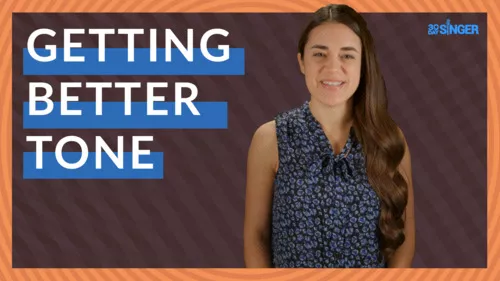
30 Day Singer Getting Better Tone TUTORIAL

By | May 3, 2022

30 Day Singer Getting Better Tone TUTORIAL

30 Day Singer Getting Better Tone TUTORIAL

While we all have a general sound that comes naturally to us, we can develop and explore different tone qualities within our voice. In this tutorial, Camille shows you different tones, with tips on how to achieve consistent tonal quality throughout your range.

Lessons:

  • 1: Introduction
  • 2: Warm and Rich Tone
  • 3: Bright and Present Tone
  • 4: Consistency Throughout Your Range
  • 5: Conclusion

Camille van Niekerk is a singer, writer and vocal instructor in Southern California. Camille began studying voice and performing in musicals at age seven. In 2010, Camille began working towards her BA in Music Education at Azusa Pacific University. She then earned her teaching credential from San Diego State University and taught classroom choral and instrumental music. Shortly after moving to LA county, Camille began her private vocal studio, providing vocal coaching, ear training, and recording for students of all ages. She is constantly refining her skills and methods for greater versatility and effectiveness. When she is not teaching, Camille enjoys singing with the L.A. Choral Lab and Ensoma Creative. She lives in San Diego with her husband and loves going to the beach, practicing yoga, reading, and cooking.

Download link

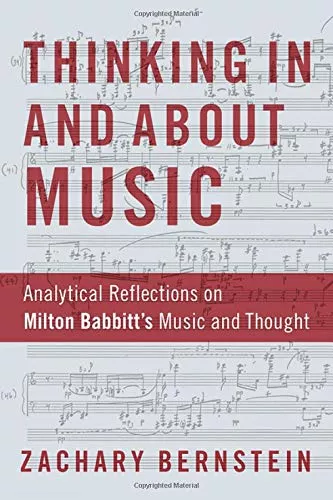
Thinking In & About Music: Analytical Reflections on Milton Babbitt’s Music & Thought PDF

By | May 3, 2022

Thinking In & About Music: Analytical Reflections on Milton Babbitt's Music & Thought PDF

Thinking In & About Music: Analytical Reflections on Milton Babbitt’s Music & Thought PDF

Milton Babbitt (1916-2011) was, at once, one of the century’s foremost composers and a founder of American music theory. These two aspects of his creative life–“thinking in” and “thinking about” music, as he would put it–nourished each other. Theory and analysis inspired fresh compositional ideas, and compositional concerns focused theoretical and analytical inquiry. Accordingly, this book undertakes an excavation of the sources of his theorizing as a guide to analysis of his music.

In Thinking In and About Music, author Zachary Bernstein shows how Babbitt’s idiosyncratic synthesis of ideas from Heinrich Schenker, analytic philosophy, and cognitive science–at least as much as more obviously relevant predecessors such as Arnold Schoenberg–provide insight into his aesthetics and compositional technique. At the same time, a close look at his music reveals a host of concerns unaccounted for in his theories, some of which seem to directly contradict theoretical expectations. Bernstein argues, therefore, that new analytical models are needed to complement those suggested by Babbitt’s theories. Departing from the serial logic of most previous work on the subject–and in an attempt to discuss Babbitt’s music as it is actually heard rather than just deciphered–the book brings to bear theories of gesture and embodiment, rhetoric, text setting, and temporality. The result is a richly multi-faceted look at one of the twentieth century’s most fascinating musical minds.

Download link

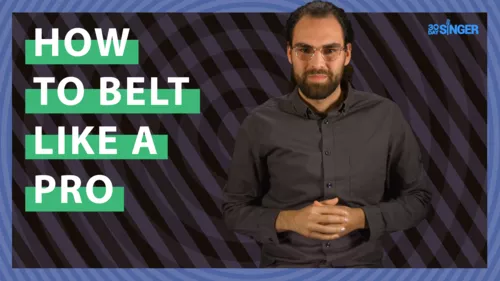
30 Day Singer How to Belt Like a Pro TUTORIAL

By | May 3, 2022

30 Day Singer How to Belt TUTORIAL

30 Day Singer How to Belt Like a Pro TUTORIAL

Welcome: So you want to learn how to belt…

  • In depth look at sustainable, powerful, controlled belting
  • Why: Belting allows us to be emotionally expressive, and helps us to be heard in many contexts!

Learning to do this properly can make the difference between:

  • damaging the voice and a long career of singing
  • Prerequisites: General vocal technique

In this series we will cover the 3 elements to belting:

  • Breath control
  • Vocal Compression
  • The Extended Pathway and Dynamics

Download link

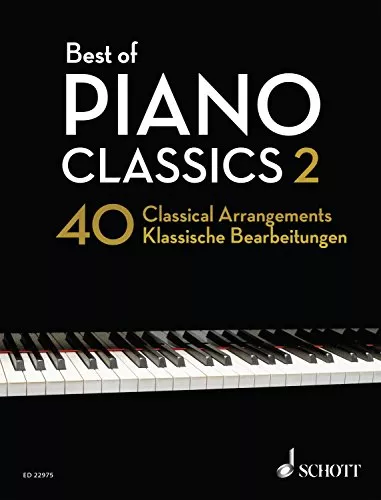
Best of Piano Classics 2: 40 Arrangements of Famous Classical Masterpieces PDF

By | May 3, 2022

Best of Piano Classics 2: 40 Arrangements of Famous Classical Masterpieces PDF

Best of Piano Classics 2: 40 Arrangements of Famous Classical Masterpieces PDF

Following the success of the first volume of Best of Piano Classics (ED 9060), Schott now presents another collection with a selection of 40 arrangements of popular classical masterpieces for the discerning amateur pianist to use over the years. The contents include great works from Bach to Gershwin, ranging from chamber music, symphonies and concertos through to opera.

This selection of musical favourites presents the best known and loveliest pieces of classical music from the Baroque era through to the 20th Century, from Air to Rhapsody in Blue. With fingerings, tempo and pedal suggestions added, these appealing arrangements for advanced players are in easy to read modern printed scores. Recommended not only for tuition purposes, but for all those who enjoy playing the piano in their leisure time.

Download link

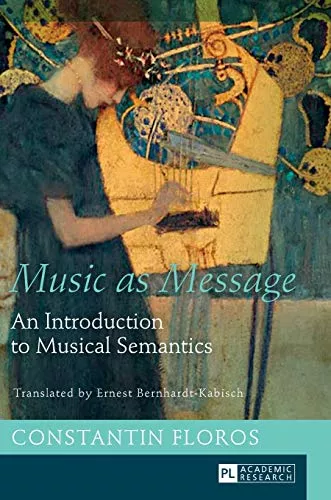
Music as Message: An Introduction to Musical Semantics PDF

By | May 3, 2022

Music as Message: An Introduction to Musical Semantics

Music as Message: An Introduction to Musical Semantics PDF

Music is often defined as art for the ear, as the language of feeling, of the heart, as sound play, or as the science of composition. But music also conveys intellectual and emotional experiences, literary, religious, philosophical, social and political ideas. Countless composers encrypt contents in their music that can be deciphered by a variety of methods.

This book is designed as an introduction to the basic questions of musical semantics and discusses Beethoven’s committed art, the core ideas of the «Ring of the Nibelung» and of the «Symphony of a Thousand», Wagner’s idea of a religion of art, the relation of music and poetry, the musico-literary conceptions of composers, the large field of program music and the history of the impact of Gustav Mahler.

Download link

Tech House Market Tech House Fundamentals V2 Bundle

By | May 3, 2022

Tech House Market Tech House Fundamentals V2 Bundle

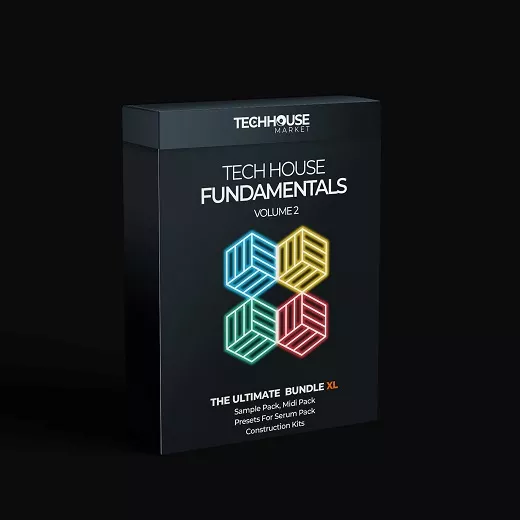
Tech House Market Tech House Fundamentals Volume 2 Bundle WAV MIDI FXP

Breathe new life into the party with this fully produced tech house bundle. It has everything a world class tech house producer needs like deep hitting bass lines, nasty synth loops, groovy percussion & top loops, a huge amount of one-shots, over 110 serum presets, MIDI files to get inspired and on top of that 4 high quality construction kits!

With the Tech house Fundamentals Volume 2 bundle you will be the proud owner of a huge collection of high quality tech house sounds and be assured to make your next tech house track a success!

* 550MB worth of fully produced tech house samples that are royalty free.

* 110 Serum Presets + Macros to shape and automate the sounds

* 70 MIDI files for groovy bass lines, catchy hooks, and house chords / stabs that are royalty free.

* Total of 4 Construction Kits for your perusal that are royalty free.

Samples

Mix your own grooves together with this professionally produced sample pack and you’ll get the people jumping through the roof with your masterpiece of a tracklist. Take a look at what’s inside below.

* 550MB worth of fully produced tech house samples that are royalty free.

* Packed with top loops, shaker loops, ride loops, synth loops, percussion loops.

* Packed with deep hitting bass lines, one-shots, and FX shots.

* Wide variety of up and down filters, fills, and atmospheres.

* Part of our Tech House Fundamentals Volume 2.

  • 20 Bass loops
  • 30 Synth Loops
  • 14 Percussion Loops
  • 5 Ride Loops
  • 15 Shaker Loops
  • 20Top Loops
  • 20 Bass Shots
  • 25 Claps
  • 10 Closed Hats
  • 15 Crashes
  • 35 Kicks
  • 10 Long Fills
  • 22 Short Fills
  • 10 Atmospheres
  • 15 Downlifters
  • 20 Uplifters
  • 30 Earcandy
  • 20 Fx Shots
  • 6 Impacts
  • 20 Open Hats
  • 54 Percussion
  • 20 Snares

Serum Presets

Unleash your creativity with our Serum Preset. This bundle is jam-packed with 110+ presets that are easily adjustable on Xfer Serum and is a great starting point for tech house experimentation.

With presets for bass, leads, chords, and more you can find what fits best for any segment of your house track. To put it simply, these are the presents you never thought you needed… until now. Take a look at what’s inside below.

* 110+ adjustable presets for Xfer Serum that are royalty free.

* Packed with bass, leads, chords, plucks, stabs, pads, and FX presets.

* Experiment with macros and let your creativity flow.

* Create automation clips and easily toggle effects.

* Part of our Tech House Fundamentals Volume 2.

  • 21 Bass Presets
  • 15 Chord Presets
  • 20 Fx Presets
  • 20 Lead Presets
  • 15 Pad Presets
  • 10 Pluck Presets
  • 10 Stab Presets
  • 7 Wavetables

Construction Kits

Build, mix, and experiment with our freshly produced Construction Kits. With 4 kits waiting to be opened, you can draw up new ideas and create the house banger you were born to make.

Open this bad boy up to find bass loops, percussion loops, and more. Just like Christmas, except for Tech House producers. Take a look at what’s inside below.

* Total of 4 Construction Kits for your perusal that are royalty free.

* Mix and match between kits for new ideas.

* Each folder contains 10 – 30 sounds and comes with kicks, bass loops, top loops, percussion loops, vocal loops, shakers, hats, snares, effects, and fills.

* Part of our Tech House Fundamentals Volume 2.

MIDI

Take full control of your tech house tracks with this MIDI package. With over 70 MIDI files, you can expect groovy bass lines and catchy hooks that leave a lasting impression on your mind.

If that’s the effect on you, imagine what it does to your crowd. Proceed with caution and take a look at what’s inside below.

* 70 MIDI files for groovy bass lines, catchy hooks, and house chords / stabs that are royalty free.

* Leave a lasting imprint with jaw clenching hooks .

* Comes with house chords progressions, house stabs, nasty melodies, and funky bass lines.

* Part of our Tech House Fundamentals Volume 2.

  • 30 Bass Midi
  • 20 Chord Midi
  • 20 Hook Midi

Download link

Demo Preview:

The Science of Sound: Equalization TUTORIAL

By | May 3, 2022

The Science of Sound: Equalization TUTORIAL

The Science of Sound: Equalization TUTORIAL

Learn about the main forms of EQ and their capabilities so you can understand how each one can be used to improve your own music.

The Science of Sound series of courses go deeper into important production topics that you’ll use again and again in your own productions.

Understanding the fundamentals behind concepts like equalization, compression, delay and the way in which we as engineers and listeners perceive sound will allow you to approach your productions with a greater confidence, purpose and know-how.

No PhD needed, the science-y parts are explained by our awesome educators in a way that anyone can understand.

Join Vincent di Pasquale, multi-platinum music producer, engineer and a co-founder of FaderPro, as he takes you on a deep dive into the science of equalization.

You’ll get a walkthrough of the main forms of EQ and their capabilities, followed by a demonstration of how each one can be used in a project. By the end of this course, you’ll be ready to approach any mixing session with confidence and ease.

Vincent di Pasquale is a multi-platinum music producer, engineer and a co-founder of FaderPro. Over the past two decades, Vincent has quietly garnered attention as a sought-after remixer and studio engineer for some of today’s most celebrated artists. He has worked with a litany of incredible musicians, including Madonna, Nelly Furtado, Justin Timberlake, Mariah Carey, Missy Elliott, Timbaland and many more. He has released projects on both major and independent labels including Atlantic Records, Sony Music, Universal, Island Def Jam, Toolroom and Subliminal.

Under the name Rebirth, his remix of Madonna’s smash hit “4 Minutes” (feat. Justin Timberlake) reached #1 on Billboard’s Hot Dance/Club Play chart. The single went on to earn double-platinum status. Vincent has a deep history in electronic music, crafting many remixes and engineering some of dance music’s biggest hits, including Lee Cabrera’s “Shake It (Move a Little Closer).”

Vincent is passionate about sharing his knowledge and experience with aspiring producers and musicians which led to his co-founding of FaderPro. He has also done educational events for Apple and has been a lecturer for both SAE Institute and the University of Colorado.

Total runtime: 3hrs 15mins
DAW: Logic Pro

Part 1: The science of sound and the fundamentals of equalization

  • Chapter 1: The Science of Sound (Intro)
    Sit down with FaderPro’s own Vincent DiPasquale as he covers the science and application of EQ in your music.
    Chapter 2: The Science of Sound
  • Chapter 2: The Science of Sound
    Vince breaks down the properties of sound, how it travels through the air, how humans perceive sound, and much more.
    Chapter 3: Types of EQ
  • Chapter 3: Types of EQ
    Vince takes a moment to discuss the audio spectrum as it relates to human hearing before walking through the different types of EQ.
  • Chapter 4: Graphic EQ
    As we get things underway, Vince pulls up Logic’s stock Graphic EQ plugin to demonstrate its functions and applications.
  • Chapter 5: Semi-Parametric EQ
    Next, Vince opens Logic’s Vintage Console EQ to break down the basics of semi-parametric EQ and its applications in the studio.
  • Chapter 6: Shelving EQ
    Diving back into Logic’s Channel EQ, Vince takes you through shelving EQ and explains its benefits and purpose in your mixes.
  • Chapter 7: Filter EQ
    Vince sticks with the Channel EQ to break down Filter EQ, which is used to remove specific frequencies in their entirety.
  • Chapter 8: Dynamic EQ
    Using oeksound’s Soothe2, Vince walks you through the basic principles and functionality of Dynamic EQ.
  • Chapter 9: Program EQ
    Using Logic’s Vintage Tube EQ, an emulation of the legendary EQP-1 by Pultec, Vince explores the uses and functions of program EQ in music.
  • Chapter 10: Mid/Side EQ
    Vince turns to the Channel EQ to explore Mid/Side EQ, which gives you more control of the middle and sides of your stereo mix.
  • Chapter 11: Match EQ
    With Logic’s Match EQ, you can use another track as a tonal reference to inform the general direction of your current mix.
  • Chapter 12: Linear Phase EQ
    Linear Phase EQ is designed to maintain phase coherence while the EQ is in use, which gives you a great deal of sonic control.

Part 2: EQ in practice

  • Chapter 13: EQ in Practice (Intro)
    Now that we’ve covered all the different types of EQ, Vince is going to show you how each type is applied in a studio setting.
  • Chapter 14: Fix or Fit?
    Before we launch into the project, Vince takes some time to introduce some concepts and questions for us to consider in our approach.
  • Chapter 15: Approaching the Project
    As we get started, Vince explains how he traditionally approaches EQ and mixing in his usual studio process.
  • Chapter 16: EQ in Practice – Kicks
    Using a Channel EQ, Vince taps into a preset and shows you how he analyzes and processes his kick drums.
    FREE CHAPTERFREE CHAPTER
  • Chapter 17: EQ in Practice – Off-Hat
    Vince tackles the hi-hat that he pulled out in the previous chapter, cleaning up its low-end without compromising its character.
  • Chapter 18: EQ in Practice – Clap
    Vince looks to clean up the clap while retaining some punch using a filter EQ with a sharp roll-off and a small boost.
  • Chapter 19: EQ in Practice – Second Kick & More Hats
    After tightening the second kick in his kick group with another filter EQ, Vince demonstrates two ways of processing your hi-hats.
  • Chapter 20: EQ in Practice – Percussion
    Vince cleans up the track’s signature percussion loop with some low-end cuts and a little extra air in the higher frequencies.
  • Chapter 21: EQ in Practice – Shaker & Ride
    Vince explains why shakers are one of his favorite things to process and mix, then uses the Vintage Tube EQ to add some color to his ride.
  • Chapter 22: EQ in Practice – The Crash
    Vince quickly shows you how to tidy up your crash, effectively wrapping up the EQ process for the project’s main groove.
  • Chapter 23: EQ in Practice – More Percussion
    Moving ahead, Vince takes a moment to tackle the stack of three unique percussion sounds we will be treating next.
  • Chapter 24: EQ in Practice – Bass & Lead Synth
    Vince shapes the sound and color of the bass with Logic’s stock AutoFilter and Xfer’s LFOTool, then takes a quick look at the lead synth.
  • Chapter 25: EQ in Practice – FX
    In this chapter, you’ll learn how to process white noise and risers as well as what to do when you can’t remove an unwanted frequency.
  • Chapter 26: EQ in Practice – Vocals
    Vince takes a quick look at the track’s vocal elements before explaining the ways in which the EQ process becomes second nature.
  • Chapter 27: EQ in Practice – Mixing Groups
    In this chapter, you’ll learn all about tonal balance and how to achieve a balanced final mix that’s ready for mastering.
  • Chapter 28: Outro
    As we say goodbye, Vince takes a couple of minutes to offer some insight into next steps following your mixing session.

Download link

30 Day Singer How to Sing in a Group (A Capella) TUTORIAL

By | May 3, 2022

30 Day Singer How to Sing in a Group (A Capella) TUTORIAL

30 Day Singer How to Sing in a Group (A Capella) TUTORIAL

Welcome to your tutorial on how to sing in a group! Our focus is mainly acapella group singing, because that requires the most specialized set of skills, compared to solo singing. But you can use what you’ll learn here in any group singing context!

Part 1 covers confident and consistent intonation, with exercises to challenge and train your ear. Part 2 will detail dynamic variety and balance, and part 3 will tackle blend, including vowel matching and tone color.

You don’t need a group to complete this tutorial, but if you have a singing buddy, invite them to join you and we’ll get started!

Lessons:

  • 1: Introduction
  • 2: Confident & Consistent Intonation
  • 3: Dynamic Variety & Balance
  • 4: Blend (Vowels, Tone Color, and Intentional Consonants)
  • 5: Conclusion

Camille van Niekerk is a singer, writer and vocal instructor in Southern California. Camille began studying voice and performing in musicals at age seven. In 2010, Camille began working towards her BA in Music Education at Azusa Pacific University. She then earned her teaching credential from San Diego State University and taught classroom choral and instrumental music. Shortly after moving to LA county, Camille began her private vocal studio, providing vocal coaching, ear training, and recording for students of all ages. She is constantly refining her skills and methods for greater versatility and effectiveness. When she is not teaching, Camille enjoys singing with the L.A. Choral Lab and Ensoma Creative. She lives in San Diego with her husband and loves going to the beach, practicing yoga, reading, and cooking.

Download link

30 Day Singer How To Sing In Tune For Beginners Part 1 TUTORIAL

By | May 3, 2022

30 Day Singer How To Sing In Tune For Beginners Part 1 TUTORIAL

30 Day Singer How To Sing In Tune For Beginners Part 1 TUTORIAL

In this lesson you will learn the basics on how to discriminate between pitches, how to match pitch, and lastly, Camille will give her best advice for choosing and learning easy songs. This tutorial will begin with a warmup to get you ready for your singing practice.

Lessons:

  • 1: Welcome!
  • 2: Warmup
  • 3: Training Your Ears
  • 4: Matching Pitch
  • 5: Learning Songs
  • 6: Conclusion

Camille van Niekerk is a singer, writer and vocal instructor in Southern California. Camille began studying voice and performing in musicals at age seven. In 2010, Camille began working towards her BA in Music Education at Azusa Pacific University. She then earned her teaching credential from San Diego State University and taught classroom choral and instrumental music. Shortly after moving to LA county, Camille began her private vocal studio, providing vocal coaching, ear training, and recording for students of all ages. She is constantly refining her skills and methods for greater versatility and effectiveness. When she is not teaching, Camille enjoys singing with the L.A. Choral Lab and Ensoma Creative. She lives in San Diego with her husband and loves going to the beach, practicing yoga, reading, and cooking.

Download link

30 Day Singer How To Sing In Tune For Beginners Part 2 TUTORIAL

By | May 3, 2022

30 Day Singer How To Sing In Tune For Beginners Part 2 TUTORIAL

30 Day Singer How To Sing In Tune For Beginners Part 2 TUTORIAL

Welcome to Part 2 of the How To Sing In Tune For Beginners series! Please make sure you complete part 1 before proceeding to this lesson.

This lesson will expand on the vocal exercises covered in part 1. Camille will be walking you through how to sing warmups with stepwise patterns, how to sing arpeggios, and lastly, she will guide you through a variety of warmup patterns while changing keys.

Lessons:

  • 1: Welcome
  • 2: Warmup
  • 3: Stepwise Patterns
  • 4: Arpeggios
  • 5: Warm-ups With Key Exchanges
  • 6: Conclusion

Download link

30 Day Singer How to Sing Pop TUTORIAL

By | May 3, 2022

30 Day Singer How to Sing Pop TUTORIAL

30 Day Singer How to Sing Pop TUTORIAL

Welcome to your tutorial on pop singing! When it comes to pop music, style and technique are much more variable than other genres, because individual singers and their unique style impact pop music as a whole. Michael Jackson changed pop music. Mariah Carey changed pop music. It’s always evolving as new artists come along and gain popularity.

Our goal for this tutorial is to learn some techniques commonly found in pop singing today. Our first lesson is on tone: specifically, how to start with your speaking voice when finding your pop tone. Next, we’ll look at different ways to play with the melody, including runs, falls, and intentional vibrato. And last, we’ll practice singing with distinct registration: full chest voice, lighter head voice, and intentional breaks between registers. After completing this tutorial, I hope you’ll listen to your favorite pop songs with more tools in your tool belt to recreate what you hear. Onto our first lesson!

Lessons:

  • 1: Intro
  • 2: Tone & Speaking Voice
  • 3: Play with the Melody
  • 4: Distinct Registration
  • 5: Conclusion

Abram Poliakoff is a singer, guitarist, pianist, teacher, conductor, and composer. He received a Bachelors of Music in Vocal Arts from USC’s Thornton School of Music and has been teaching music for 8 years. He is currently both the Associate Artistic Director and a tenor in the L.A. Choral Lab, which recently released its first studio album Sonic Visions in the fall of 2019. Abram teaches and performs a wide range of genres including Classical, Jazz, Folk and Popular music in the Los Angeles area. He has also sung with the San Francisco Opera and Pocket Opera in the Bay Area. His teaching mission is to help his students utilize vocal technique to find their authentic and healthy voice while maximizing genre flexibility and a naturalness of expression.

Download link

30 Day Singer How to Sing Vibrato Part 2 TUTORIAL

By | May 3, 2022

30 Day Singer How to Sing Vibrato Part 2 TUTORIAL

30 Day Singer How to Sing Vibrato Part 2 TUTORIAL

Are you ready to take your vibrato training to the next level? If so, check out How to Sing with Vibrato: Part 2! We’ll cover common vibrato issues and vibrato usage in different musical genres. See you there!

Lessons:

1: Intro

  • 2: Warm Up
  • 3: Part 1 – Vibrato and Straight Tone
  • 4: Part 2 – Correcting Issues with Vibrato
  • 5: Part 3 – Vibrato Usage in Different Musical Genres
  • 6: Conclusion

Camille van Niekerk is a singer, writer and vocal instructor in Southern California. Camille began studying voice and performing in musicals at age seven. In 2010, Camille began working towards her BA in Music Education at Azusa Pacific University. She then earned her teaching credential from San Diego State University and taught classroom choral and instrumental music. Shortly after moving to LA county, Camille began her private vocal studio, providing vocal coaching, ear training, and recording for students of all ages. She is constantly refining her skills and methods for greater versatility and effectiveness. When she is not teaching, Camille enjoys singing with the L.A. Choral Lab and Ensoma Creative. She lives in San Diego with her husband and loves going to the beach, practicing yoga, reading, and cooking.

Download link

30 Day Singer Intro to R&B TUTORIAL

By | May 3, 2022

30 Day Singer Intro to RnB TUTORIAL

30 Day Singer Intro to R&B TUTORIAL

Welcome! So you’d like to start working on your r&b vocals. As a supplement to a lot of listening, this tutorial will help you develop some of the technical skills you’ll need. All levels are welcome! But if you feel a little overwhelmed with runs or controlling vibrato, we have tutorials on those topics for you to check out first.

Part 1 covers runs and improvisation – and I promise you don’t need experience with improv to start. In part 2, we’ll work on our rich chest voice tone. And part 3 is all about controlling vibrato.

Lessons:

  • 1: Intro
  • 2: Runs & Improvisation
  • 3: Rich Chest Voice Tone
  • 4: Slower Vibrato
  • 5: Conclusion

Download link

30 Day Singer Intro to Vocal Registers TUTORIAL

By | May 3, 2022

30 Day Singer Intro to Vocal Registers TUTORIAL

30 Day Singer Intro to Vocal Registers TUTORIAL

Many beginning singers have at least heard the terms “chest voice” and “head voice”. But if those terms are new to you, fear not!

When we talk about registers, we’re referring to a section of the voice (or a collection of pitches) in which sound is produced a certain way and results in a specific tone quality.

Although there’s some disagreement over exactly how many registers we have, most of our time is spent developing chest voice (which we generally use for lower pitches), head voice (for higher pitches), and mix/middle voice to bridge the two.

Other registers that we use less often would be falsetto and whistle (for extremely high pitches), and vocal fry (used as an exercise or stylistically).

Our goal today is to access chest voice and head voice; down the road we’ll dive a bit deeper into mix voice!

Lessons:

  • 1: Welcome
  • 2: Chest Voice
  • 3: Head Voice
  • 4: Conclusion

Abram Poliakoff is a singer, guitarist, pianist, teacher, conductor, and composer. He received a Bachelors of Music in Vocal Arts from USC’s Thornton School of Music and has been teaching music for 8 years. He is currently both the Associate Artistic Director and a tenor in the L.A. Choral Lab, which recently released its first studio album Sonic Visions in the fall of 2019. Abram teaches and performs a wide range of genres including Classical, Jazz, Folk and Popular music in the Los Angeles area. He has also sung with the San Francisco Opera and Pocket Opera in the Bay Area. His teaching mission is to help his students utilize vocal technique to find their authentic and healthy voice while maximizing genre flexibility and a naturalness of expression.

Download link