
Sknote SoundBrigade v.3.7.6.0 (VST3) [WIN]
https://www.bluebirdrun.com/the-event/ A brigade of filters with a mission.
Evidence, Mastering, Mixing, Product, Software, Software Product.
A “Brigade” of filters has a “Mission” assigned (an algorithm).
https://cthainaut.com/notre-equipe/ They act in reaction to incoming signal, only in the frequency range assigned by the user.
The special configuration of the filters and the way they interact make SoundBrigade a new and unique effect.
Pregabalin 300Mg Buy Online Tame – A track contains a frequency band which stands up too strong but an EQ isn’t the way to go. The action of the filters tames its level, while being transparent and preserving dynamics.
Control – Some tracks may require to get a fuller spectrum, not only by taming peaks but also by “upward” compressing components.
https://www.skinandwellnesscentre.com/salt-room-therapy/ Wakeup – To be used on dull tracks, where dynamics are too compressed, or the spectrum is flat. Also interesting for experimenting. High peaks get higher, low valleys get lower.
https://vibrantguide.com/cream-puffs/ Rotate – No EQ action, no modifications of the spectrum, just phase rotation. The more the filters are focused on a narrow range, the stronger their action. So called “dispersion” (makes “tac” sound “twack”), in a different way. Try it on strong peaks, as a de-esser, on pops and more.
Note: Only Center and Range controls affect the “Rotate” Mission.
Master – Like Tame but filters’ parameters have a strong frequency dependence, suitable for a mix.
NEW in v.2 – Dry-out. No thresholds, dries-out tails from the sound in the selected frequency range. Too much reverb somewhere? This could be magic.
NEW in v.2 – De-snap. No thresholds, tames peaks in the selected frequency range. Some frequencies are too dynamic? Set and go.
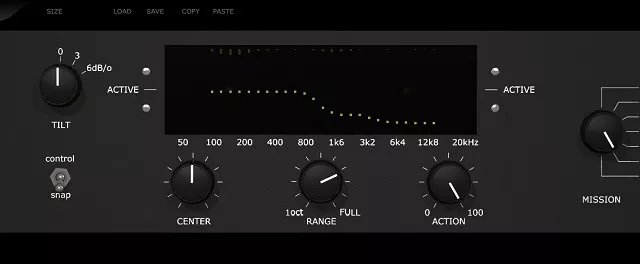
Threshold – Set the internal level threshold for the filters. The actual value is related to Tilt control (see below).
Tilt – Music contains more energy in low frequency range, less energy in higher frequency range. Looks like a slope from 4.5 to 6dB/octave. The action of the filters is smoother if their thresholds are aligned to the overall spectrum. It is NOT a tilt EQ. For example, if Threshold is set to 0dB and Tilt is set to 6dB/octave, a filter centered at 100Hz (one octave about the reference, 50Hz) has a threshold of -6dB.
Makeup – a simple makeup gain after the effect.
Control/Snap switch – Selects time constants for the effect. Snap is generally a bit slower, tuned to enhance attacks.
Center – set the center frequency for the range of action.
Range – set the width of the range of action. No effect is applied out of this range.
Action – scales the overall action of the effect, from dry to max sensitivity.
Mission – the algorithm for the filters.
Display – its mode changes with the selected Mission. Bars show input levels, small squares show filters’ action. No units, action is more complex than that, is useful just as a visual reference.
https://www.location-chatel-chalet.com/services/ Download link